
In betting, there's no room for error. Advertising restrictions are real, windows of opportunity are short, and the users who actually matter don't show up on their own.
That's why Rufus Social, experts in turning creativity into results, and Rocket Lab, the App Growth Hub behind the growth of some of the region's most important apps, decided to explore this vertical together.
From our experience working with betting apps across different markets, we both arrived at the same conclusion: communicating well and growing well aren't two separate conversations. They're two parts of the same problem.
In a vertical this regulated and this competitive, having the right creative isn't enough if distribution falls short. And the best acquisition strategy won't matter if the message doesn't land. Both have to work together, and that requires alignment from day one.
Betting isn't just another vertical. It's one of the most regulated, most competitive, and most context-dependent categories in the mobile ecosystem.
One of the patterns we see most often at Rocket Lab is that many apps start by concentrating their acquisition on the market's most traditional channels. At first, this usually works well.
Over time, though, challenges start to surface: rising costs, saturated audiences, and restrictions that close off new growth opportunities.
Other apps lean heavily on affiliates. Growing in volume happens fast, but visibility into what those users actually do inside the app, and how much they're worth over time, stays limited.
That's why more and more apps are diversifying their acquisition sources, cutting reliance on a handful of platforms and reaching new audiences instead. In that process, channels like OEM, programmatic, direct inventory, and SDK traffic start to matter more, as part of a strategy that balances scale, user quality, and long-term sustainability.
And here's something Rufus Social sees echoed in the creative side of the work: the brands that navigate this vertical best aren't the ones that find a formula and repeat it. They're the ones with systems, in distribution, in production, in learning, that let them adapt.
-2.png?width=740&height=247&name=Dise%C3%B1o%20sin%20t%C3%ADtulo%20(13)-2.png)
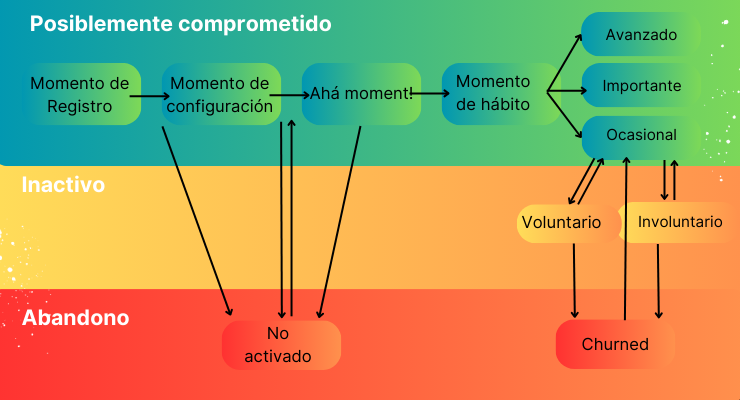
In betting, the real point of value shows up further down the funnel.
An app can rack up thousands of installs. But if those users don't register, don't take that first step inside the platform, or never come back, the growth isn't profitable.
The biggest drop-off doesn't happen at the install. It happens between the install and the first deposit. That's the moment when the user has to trust the platform, register, verify their information, link a payment method, and make a financial decision, often for the first time on mobile.
For betting apps, trust isn't just a branding concern. It's a condition for the user to move forward in the funnel. Without that trust, the user doesn't deposit. And without a deposit, there's no sustainable growth.
That's why CPI alone can't be the key metric. The focus has to shift toward registration, first deposit, first bet, recurrence, and LTV.
And that trust doesn't start building once the user reaches the app. It starts much earlier, from the very first contact with the brand.
That's why creativity and acquisition can't be treated as separate conversations. How a brand presents itself, communicates, and builds credibility has a direct impact on whether that user moves toward the first deposit.
If the message pulls in users with no real intention of moving through the funnel, the problem isn't just distribution. It's about what you're promising, and to whom. In a vertical where welcome bonuses and promotions are the norm, it's easy to generate a wave of users who cash in on the incentive and disappear. Creative work needs to attract the right user, not just grab attention.
At Rufus, this comes down to a question that's present from the start of any creative project in this vertical: are we attracting the right user, or just sparking curiosity?
.
There's something that sets betting apart from almost every other vertical: user intent isn't stable. It shifts depending on the moment, the event, the conversation happening right then.
A user who sees a betting app ad in the middle of a live match isn't the same user who sees it on a random Tuesday afternoon with no sporting event in sight. Their attention is different. Their willingness is different. And so is their likelihood of moving through the funnel.
That's why having the right audience isn't enough in betting. Where the campaign shows up, and when, matters just as much. Strategies that prioritize inventory aligned with sports content, in contexts where the user is already mentally close to the vertical, perform completely differently than ones chasing pure impression volume.
This applies to both distribution and creative. A creative aligned with what's happening in that moment is far more likely to drive the right action than a generic one. And that takes both access to the right inventory and the ability to produce assets fast when the opportunity opens up.
Through partnerships with DSPs and access to premium inventory, Rocket Lab can activate campaigns in environments naturally aligned with user behavior. And at Rufus, the ability to turn around creative in 24 to 48 hours during high-demand moments isn't an exception, it's built into the system.
In betting, every brand operates under the same regulatory framework. The same messaging restrictions, the same limits on what can be promised, the same formats platforms allow or don't. In that environment, standing out through what you say gets harder and harder.
So differentiation stops coming from what you can promise and starts coming from the trust you're able to build.
That changes the creative logic entirely. It's not about finding the boldest claim within what's allowed. It's about building a brand presence the user perceives as trustworthy, familiar, and relevant, right when their intent is activated.
At Rufus Social, this work starts before the first asset is ever produced: creative audits, audience analysis, clarity on what can be said and how. In this vertical, that clarity also means checking audiences, disclaimers, intellectual property, claims, visual references, and consistency with the landing page before anything goes live.
From there, a production system that allows for testing, learning, and adjusting in short cycles, without losing brand consistency or falling into the regulatory mistakes that carry real consequences in this vertical.
In practice, this also means reviewing basic creative compliance criteria that can vary by market, platform, campaign type, and context. For example, working with criteria such as:
Audiences 18+
Avoiding organic content about betting
Not using logos or visual identity from leagues, clubs, or competitions
Avoiding talent or characters who could appear under 21
Not using public figures or AI-generated characters that could be mistaken for real people
Making sure the mandatory disclaimer "18+. Bet responsibly." stays visible and legible across all assets when required
How is that trust actually built? There's no single formula, but a few principles show up again and again in the most effective strategies.
A responsible tone, not an apathetic one. Restrictions don't mean boring creative. They mean creative that builds trust. An informative, positive tone, without urgency or pressure, can be just as effective as an aggressive one, with far less risk.
CTAs that invite, not pressure. "Join in," "Explore," "Discover" open doors. "The moment is now" or "Don't miss out" are the kind of pressure platforms penalize and users read as noise.
Consistency between the ad and the experience. In betting, the landing page has to deliver on what the creative promises. Any mismatch creates friction right at the most critical point in the funnel.
Every betting app is different. Different business model, different audience, different level of maturity, different market.
Some are in acquisition mode. Others need to optimize quality and retention. Some are building brand recognition on mobile for the first time. Others already have a user base and need to activate recurrence.
That's why, at Rocket Lab, the starting point is never the channel or the format. It's understanding how the app works, what the user journey looks like, which events actually matter in the funnel, and what type of growth it needs to build right now. From that analysis comes a strategy that combines channels and formats based on each app's reality, with local support that adapts to the particularities of each market.
And within that strategy, creative isn't something added at the end. It's part of the diagnosis from the start.
-2.png?width=740&height=247&name=Dise%C3%B1o%20sin%20t%C3%ADtulo%20(14)-2.png)
From sports betting app campaigns managed by Rocket Lab:
👉 1,180% growth in purchase volume over one yearThrough Space, Rocket Lab's internal intelligence platform, these patterns hold up: the strategies that perform best in betting are the ones that combine channel diversification, a focus on real value metrics, and creative aligned with the moment and the user.
It comes down to reaching the right users, at the right moment, with the right message, and with enough trust for them to move through the funnel.
Because in a vertical where restrictions keep growing and competition keeps rising, the advantage isn't in distribution alone or creative alone. It's in the ability to make both work together.
Want to explore how this applies to your app? Talk to the team.
.png?width=1024&height=576&name=Blog%20cover%20%20(89).png)
-1.png)
.png)
.png)

